

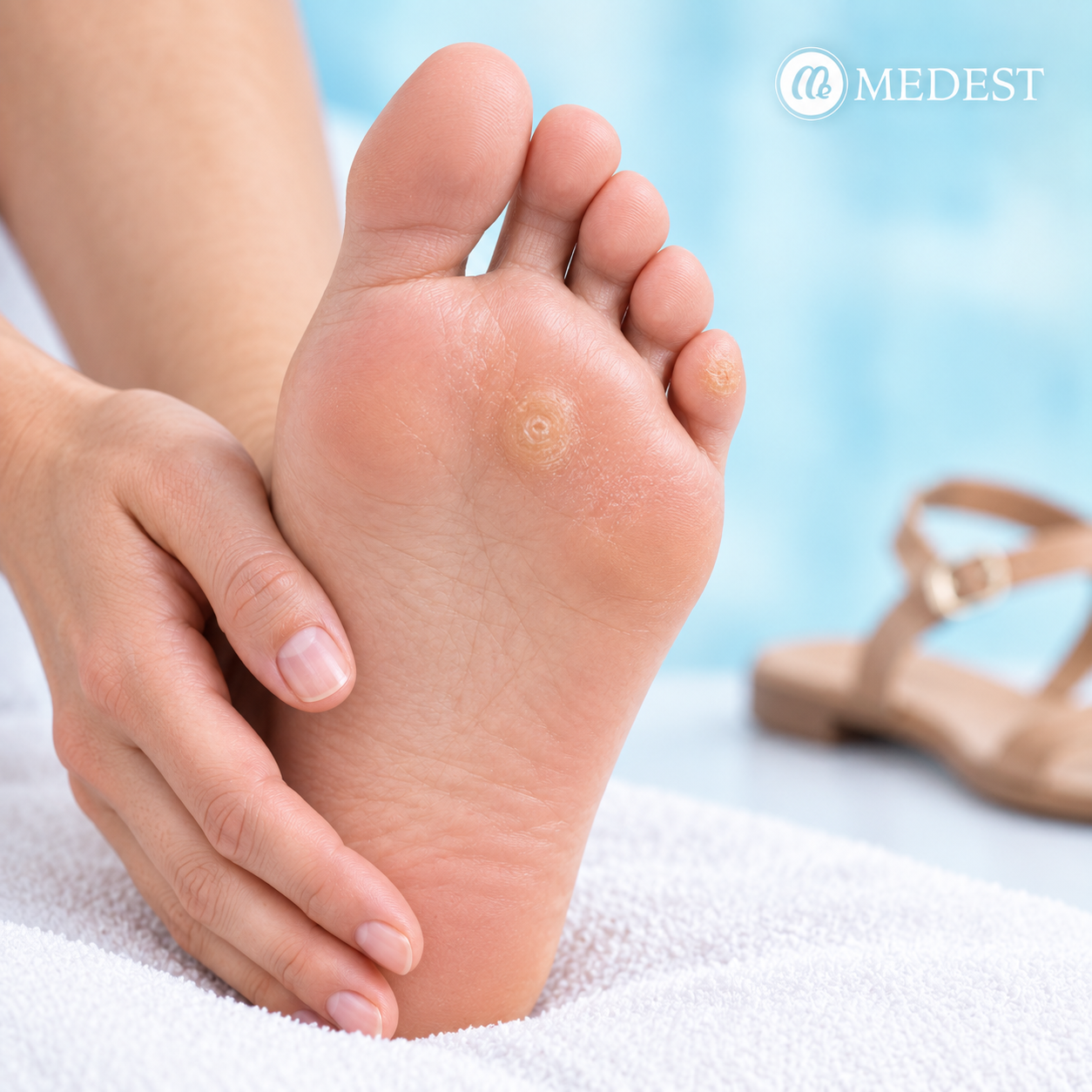
After a season in open sandals, hard and sometimes painful areas may remain on the feet. Skin thickens where footwear repeatedly rubs or presses on it. This is a protective response, but it can interfere with walking. Removing the hard surface alone usually brings only temporary relief if the pressure remains. An assessment is particularly important when pain is severe, you have diabetes or you are not sure what has developed on your foot.
Where Footwear Pressure Causes Corns and Calluses
The heel and the area beneath the metatarsal bones bear weight on the sole. A tight strap or narrow toe box can cause problems between or on top of the toes. A callus is generally a broader patch, while a small dense corn can hurt at a specific point when pressed. Foot shape, gait and weight distribution also matter: identical sandals can leave different marks on different feet.
How Do You Tell a Callus From a Deep Corn?
In everyday speech, a broad hard patch is called a callus, while a small painful thickening is often called a corn, sometimes a “core corn.” Sensation alone does not confirm the diagnosis: a plantar wart or another lesion can resemble a familiar corn. A specialist checks the surface, location and type of pain and may refer you for further assessment if the diagnosis is uncertain.
Do not try to cut out a supposed “core” yourself. Even after the top layer is removed, footwear pressure can produce another thick patch, while deep cutting creates a wound. Photographs can document change but cannot measure depth or test sensation in the foot. Unexpected color change or bleeding deserves timely examination.
Home Care Without Cutting the Skin
If you have no diabetes, sensory loss, circulation problem or broken skin, gentle softening during ordinary washing and careful removal of only a little superficial thickening may make care easier. Do not remove too much skin. Moisturize with a product you tolerate and wear shoes that do not press on the area. Avoid blades, scissors and harsh files that abrade the skin until it bleeds.
Pressure-relieving pads can sometimes help, provided they do not rub surrounding skin or make shoes tighter. Acid-containing corn plasters and strong softeners are unsuitable for self-treatment when you have a foot condition or an uncertain diagnosis. With diabetes, attempting to remove a corn yourself can cause an injury that heals poorly: agree on foot care with a clinician.
When Should You See a Podologist?
Arrange an appointment if pain recurs, the thickening returns quickly, looks unusual or makes it hard to find comfortable shoes. With diabetes, reduced foot sensation, poor circulation or a previous foot ulcer, show even a small change to a healthcare professional. An open wound, pus, increasing redness, swelling or heat in the skin requires prompt medical attention.
Do not keep putting off an assessment because a plaster temporarily covers the spot. Shifting weight away from pain may create new pressure points elsewhere. Bring your frequently worn shoes and tell the clinician which skincare products you have already tried so they can better understand the irritation.
Foot Assessment and Pressure Relief
A Medest specialist examines the thick area and surrounding skin and asks about pressure, walking and other medical conditions. The clinic lists podology assessment and device-assisted foot care; the choice of treatment depends on the foot’s condition. The aim is not just to smooth a painful patch but to reduce repeated pressure. If the lesion may have another cause, the podologist can recommend another clinician.
Mention diabetes, medicines, reduced sensation and previous wounds before any treatment. Ask what home care is safe and whether your footwear needs changing; a tight shoe can quickly turn an intervention into short-lived relief. Treatment is tailored to the individual. A single visit cannot be promised to make every corn disappear permanently while the same pressure remains.
Why Does a Corn Come Back After Treatment?
Mechanical pressure can continue even after excess hardened skin has been carefully removed. New sports activity, narrow shoes, a stiff seam or how weight is distributed can contribute. Sometimes gait and orthopedic factors need evaluation rather than repeated treatment without a plan. The podologist can advise whether changing shoes is enough or another specialist should be involved.
Note how many days pass before pain returns and which shoes you were wearing. If the area changes appearance, bleeds or becomes more painful despite reducing pressure, a repeat assessment is more useful than a stronger foot file. Do not diagnose yourself by comparing photographs online: similar lesions can need different approaches.
How Can You Reduce the Risk Next Season?
Choose shoes with room for the toes and a secure heel; straps should not cut into the skin as you walk. Wear a new pair for short outings initially, check for rubbing and use protective padding that does not constrict the foot. Consistent gentle care is preferable to occasional deep removal of hard skin. With recurrent corns, compare the locations of thickened skin with the shoes you wear most often.
Frequently Asked Questions
Can I cut out a corn with nail scissors? No. It is easy to injure the skin and introduce infection. A painful, thick area needs an accurate diagnosis and a safe care plan.
Does a medical pedicure replace comfortable shoes? No. If the pressure persists, thickened skin may return even after professional treatment.